Most Leadership Problems Are Honesty Problems
Jim Fielding ran Disney Stores, DreamWorks, and Claire's. His best leadership advice isn't a framework — it's a loop between groundedness and honesty.

I was talking with Jim Fielding recently — former president of Disney Stores Worldwide, CEO of Claire's, and a leader who's operated at the top of DreamWorks and Twentieth Century Fox — and he said something that stuck with me. We were deep in a conversation about what actually makes leadership work, and Jim's answer wasn't a framework. It wasn't a methodology. It was simpler than that.
Stay honest. Stay grounded. Everything else follows.
The Mask Is the Problem
Jim tells a story about a period earlier in his career when he was having migraines, stomach problems, carrying a level of stress that no title or compensation could justify. Not because the work was impossible — but because he was performing a version of leadership instead of practicing it. The moment he dropped the performance and showed up as himself, everything changed. "I was a better executive, a better person, a better leader, a better friend," he says. "Just better to be around."
This isn't a story about vulnerability as a buzzword. It's a story about what happens when a leader stops managing how they're perceived and starts managing what's actually happening.
Most of us have worked for someone wearing a mask. The leader who says the project is on track when it isn't. Who holds back hard feedback because delivering it would be uncomfortable. Who builds a narrative around success while the team quietly absorbs the cost of misalignment. The mask isn't malice — it's self-protection. But the damage is the same.
Why Honesty Is So Hard
If honesty were easy, every organization would already have it. But the incentives often run in the opposite direction. Leaders get rewarded for confidence, for certainty, for having the answer. Admitting "I don't know" or "this plan isn't working" feels like career risk. And so the performance continues — in boardrooms, in status meetings, in quarterly reviews where everyone presents a version of reality that's been carefully smoothed over.
The result is a specific kind of organizational dysfunction: plans that look solid on paper but don't reflect what's actually happening. Teams that stay busy executing the wrong priorities because no one corrected course. Feedback loops that run on delay because the real conversation happens in hallways, not in rooms where decisions get made.
These look like strategy problems. Or execution problems. Or alignment problems. But trace them back far enough and most of them are honesty problems.
Groundedness Makes Honesty Possible
Here's the thing Jim understood early — and that I've come to believe more deeply the longer I work in this space: honesty and groundedness aren't two separate leadership traits. They're a loop.
Groundedness is what gives a leader the stability to be honest. When you know who you are, when you're not performing for the room, you can say the thing that needs to be said. You can hear the feedback that stings — as Jim did during a 360-degree review at Disney that initially hurt, but ultimately transformed how he led. You can sit with discomfort instead of papering over it.
And honesty, in turn, keeps you grounded. The moment you start curating reality — telling the team what they want to hear, telling the board what looks good — you drift. You lose contact with what's actually happening. You start making decisions based on the story instead of the situation.
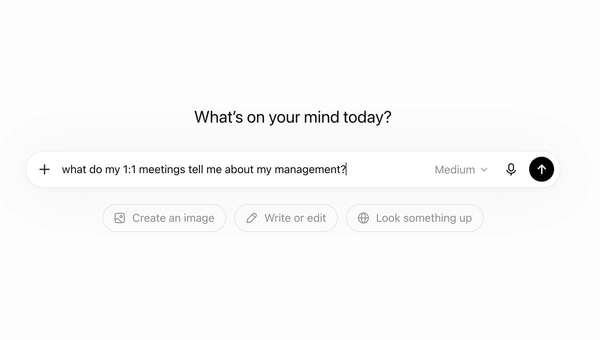
Jim had a practice at Disney called "Java with Jim" — random coffee meetings across all levels and functions, with no agenda and no hierarchy. It sounds simple, almost trivially so. But the effect was profound: it gave him access to the ground truth that formal reporting structures filtered out. The quieter voices. The inconvenient data points. The things people don't say in a room full of titles.
That practice only works if the leader actually wants to hear what's real. And that willingness only exists if the leader is grounded enough to handle it.
The Management Problems This Solves
Think about the most persistent problems in organizational management. Misalignment between strategy and execution. Planning theater — the ritual of producing plans that everyone knows won't survive contact with reality. Political maneuvering that prioritizes optics over outcomes. Broken feedback loops where problems are visible to the team months before they reach leadership.
Every one of these is, at its root, an honesty failure. Not dishonesty in the dramatic sense — no one's lying in a boardroom. It's subtler than that. It's the slow drift that happens when leaders aren't grounded enough to tell the truth about what's working and what isn't. When the culture rewards polished narratives over accurate ones. When "how are things going?" reliably produces "great" instead of "here's what's actually happening."
The fix isn't more process. It's not another framework or another status meeting or another reporting layer. The fix starts with leaders who are willing to look at reality clearly — and build systems that make reality visible.
If you lead a team, you can start this week. Pick the meeting where you're most tempted to perform and choose honesty instead. Ask your team what's actually stuck — then stay quiet long enough to hear the answer. Do what Jim did with "Java with Jim": create a space with no agenda and no hierarchy, and listen for what the formal structures filter out. The practice is deceptively small. The effect compounds.
Systems That Reward Honesty
Personal groundedness matters. But it's not enough on its own — not at scale. The honest leader still operates inside an organization that runs on fragmented updates, stale plans, and status reports crafted to look good rather than be accurate. Individual honesty collides with systems that make honesty hard.
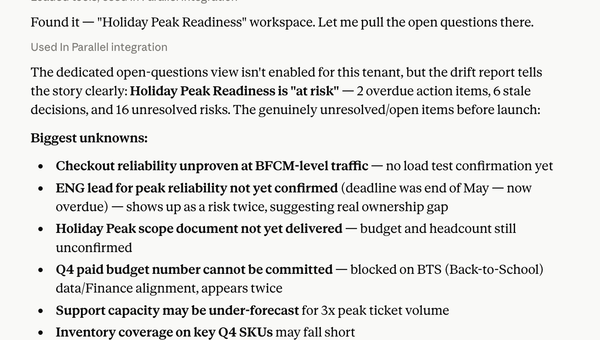
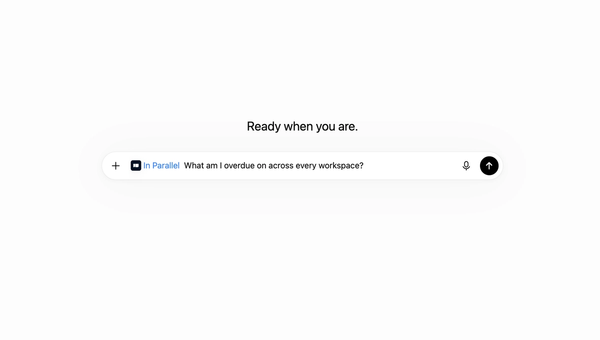
This is something we think about constantly at In Parallel. An Intelligent Management System is different from a project tracker or a reporting dashboard because it isn't a static record of what someone typed last Friday. It's a shared, living view of reality — goals, plans, and status connected in one place, updating continuously as the work evolves. When the ground truth is visible to everyone, the incentive to curate a polished narrative disappears. There's nothing to hide behind, and no advantage in trying.
That matters because most coordination failures aren't caused by a lack of information. They're caused by a lack of honest information arriving at the right time, in the right context. An IMS closes that gap — not by replacing human judgment, but by making it harder for reality to get lost between the meeting and the spreadsheet.
But here's the part that technology alone can't solve: the system only works if the humans operating it are willing to be honest in the first place. The best coordination layer in the world can't overcome a culture where leaders are incentivized to perform instead of lead.
The technology creates the conditions for honesty. Grounded leaders bring it to life.
The Simplest Leadership Advice
Jim Fielding spent thirty-five years running some of the most recognizable brands in the world. He could have offered any number of sophisticated leadership models. Instead, his advice comes down to something almost disarmingly simple: stay honest with yourself, stay honest with your team, and stay grounded enough to do both when it's hard.
Most leadership problems aren't waiting for a better strategy or a smarter framework. They're waiting for someone to tell the truth.
Jim Fielding is the author of All Pride, No Ego (Wiley, 2023) and a former president of Disney Stores Worldwide, CEO of Claire's, and executive at DreamWorks and Twentieth Century Fox. He joins Kristian Luoma on an upcoming episode of The Coordination Tax — In Parallel's podcast about what breaks when teams stop sharing the same reality. Follow the show wherever you get your podcasts so you don't miss it.
Get insights like this in your inbox
One email per week on execution intelligence, team coordination, and enterprise AI. No fluff.
By subscribing you agree to our Privacy Policy. Unsubscribe anytime.